India is ramping up its energy imports from the U.S. in a bid to reduce its trade surplus with Washington — a key demand of the Trump administration during trade negotiations with New Delhi.
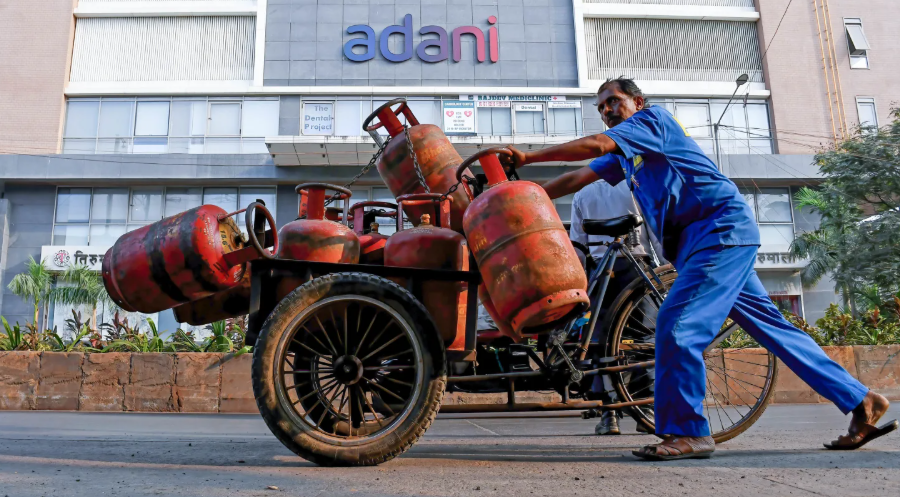
On Monday, Hardeep Singh Puri, Indian union minister of petroleum and natural gas, announced a deal that will see the United States supply nearly 10% of New Delhi’s liquefied petroleum gas (LPG) imports.
This would be the “first structured contract of U.S. LPG for the Indian market” and the purchases would be based on “Mount Belvieu as the benchmark for LPG purchases,” he said.
“We believe that this move is for diversifying our LPG sourcing, which is currently concentrated in the Middle East, and also to reduce trade surplus with the U.S.,” Nomura’s equity analyst for energy Bineet Banka told in an emailed response.
India’s total LPG imports are around 20-21 million tons annually, he said adding that if 10% of that supply is sourced the U.S., at current prices, it implies an incremental import of $1 billion from the U.S. Though Banka said that the incremental imports are “not much” compared with the India’s trade surplus of $40 billion with the U.S.
Since August, ties between the U.S. and India have been strained after Washington imposed a tariff of 50% on Indian goods. Reciprocal tariffs of 25% were imposed on Indian goods as part of a broad strategy to address trade imbalances and boost domestic industries, while the other 25% was due to India’s import of Russian oil.
In September, President Donald Trump doubled down on his criticism of India, referring to trade ties with the country as “a totally one-sided disaster!”
During that same month, Indian Commerce Minister Piyush Goyal, who was in the U.S. for trade negotiations, had reportedly said that India will increase its trade with the U.S. on energy products in the years to come.
“And being close friends, natural partners, our energy security goals will have a very high element of US involvement,” the Indian minister had said.
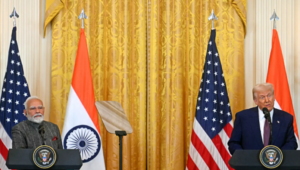
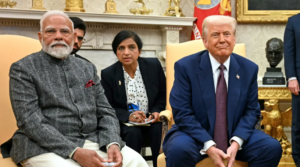
Since then, the two sides have softened their stances, with Trump recently evoking memories of his last visit to India and referring to Prime Minister Narendra Modi as “his friend” and a “great man,” as he addressed reporters at the White House on Nov 6.
The U.S. President also said that India has “largely stopped buying Russian oil,” a fact which is yet to be backed by data.
According to data shared by tanker tracker, Kpler, as of Nov. 17, India’s imports of Russian crude oil remain at a relatively high level, at 1.85 million barrels per day compared to 1.6 mbd in October.
“Given that buyers are granted until Nov 21 to wind down transactions with Rosneft and Lukoil, Indian refiners are expected to rush to bring in as many barrels as possible in the next few days,” said Kpler’s Muyu Xu.
But she added that India’s imports of U.S. crude “saw a sharp rise in October, reaching 568 kbd (thousand barrel per day)—the highest level since February 2021.”
India imports around 5 million barrels per day of crude oil, according to data from Nomura which predicts that the total impact on the import bill will be around $1.1 billion, assuming that 35% of the Russian mix this year comes down to 15% and taking into account an average Russian crude discount of $3 per barrel.