US Vice President JD Vance will begin a four-day visit to India on Monday, with the two countries looking to unlock economic opportunities and negotiate a bilateral trade deal.
Vance will meet Indian Prime Minister Narendra Modi in New Delhi for talks on economic, trade and geopolitical relations. Vance’s visit is seen as a key diplomatic mission by President Donald Trump’s administration and comes amid a rapidly intensifying trade war between Washington and Beijing, New Delhi’s main rival in the region.
A trade deal between India and the United States could significantly enhance economic ties between the two countries and potentially strengthen diplomatic ties.
The United States is also India’s largest trading partner, with bilateral trade reaching $190 billion as of recently.
The Indian Ministry of External Affairs said the visit will “provide an opportunity for both sides to review progress in bilateral relations” and that the two leaders will “exchange views on regional and global developments of mutual concern.”
Vance’s arrival in India comes just weeks after Director of National Intelligence Tulsi Gabbard visited India for a geopolitical conference and two months after Modi met Trump in Washington.
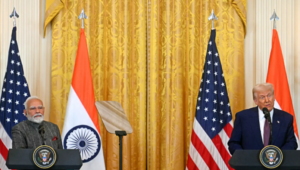
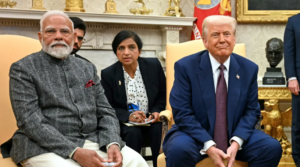
Modi was one of the first leaders to visit the US and hold talks with Trump after he returned to the White House. During the visit, Modi hailed a “super partnership” with the US and launched a negotiation process to minimize the possible impact of Trump’s tariffs. Trump had previously lowered tariffs on a range of US goods.
In any case, Trump had imposed a 26% tariff on India in his now-suspended tariff plan, which provided temporary relief to Indian exporters.
During the visit, Modi sought to reduce looming trade barriers by expressing his willingness to further reduce tariffs on US goods, repatriate illegal Indian citizens, and purchase military equipment. The two countries also agreed to launch negotiations to reach a bilateral trade agreement.
Modi said on Friday that he spoke to Elon Musk and said that he and the SpaceX CEO “discussed the huge potential for cooperation in the fields of technology and innovation” and said that “India remains committed to advancing its partnership with the United States in these areas.”
India is a close partner of the United States in bilateral trade, foreign direct investment, defense cooperation, and an important strategic ally of the United States in the Indo-Pacific region to counter China’s growing influence.
It is also part of the Quadrilateral Security Dialogue, a grouping of the United States, India, Japan and Australia, and is seen as a counterweight to China’s expansion in the region.
In recent years, leading US companies such as Apple and Google have expanded their presence in India. Last month, Musk’s Starlink reached an agreement with two of India’s top telecom operators to provide satellite-based internet services.
In an effort to further boost trade relations, the United States and India have set an ambitious goal of more than doubling bilateral trade to $500 billion by 2030 under the expected trade deal.
The talks are particularly urgent for New Delhi as Trump’s reciprocal tariffs could hit India hard, especially in sectors such as agriculture, processed food, auto parts, high-end machinery, medical equipment and jewelry. This poses a major challenge to the Modi government, which hopes to drive economic recovery and create jobs through exports.
Modi established a good working relationship with Trump during his first term. It now looks like the two leaders are expected to further strengthen cooperation between the two countries, especially in the field of trade. Amid growing tensions between the United States and China, Chinese President Xi Jinping is working to build Beijing into a reliable trading partner in the Asia-Pacific region.
India has also taken a series of steps to win Trump’s support. It will buy more oil, energy and defense equipment from the United States, including fifth-generation stealth fighters.
However, the United States wants greater market access for its agricultural and dairy products in India, but New Delhi has been reluctant because the agricultural sector employs most of India’s labor force.
Vance’s trip to India marks his first official visit to India, which is of great significance to his second family. His wife, Usha Vance, is a devout Hindu whose parents are immigrants from southern India.
The White House release said that the Vance couple will be accompanied by Usha, their children and other senior members of the US government. They will also visit the Indian cities of Jaipur and Agra and participate in activities at cultural sites.