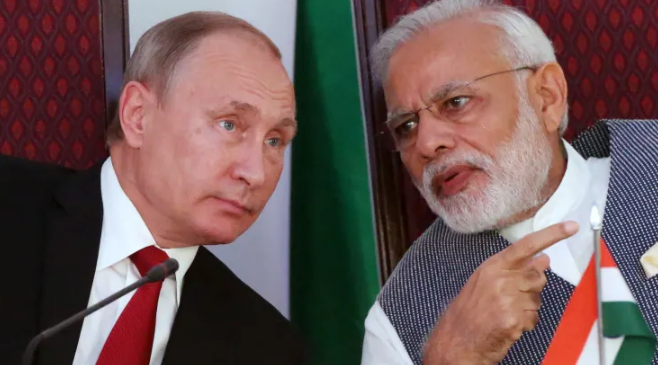
ndian Prime Minister Narendra Modi’s visit to Ukraine on Friday is likely to be closely watched by New Delhi’s long-standing ally, Russia.
The trip comes as India looks to navigate alliances with arch enemies Russia and the West, as one of the few countries to have robust trading and diplomatic relations with both parties since Moscow’s invasion of Ukraine in 2022 set off heightened global tensions, sanctions and animosity toward the Kremlin.
Modi’s government has looked to remain neutral throughout the ongoing war between Russia and Ukraine, but has been criticized for maintaining tight trade and diplomatic ties with Moscow. India has refused to condemn the war and has continued to buy discounted Russian oil, despite Western efforts to boycott such energy purchases, whose revenues fund the conflict.
Now, India appears to be seeking closer relations with Ukraine through Modi’s visit to Kyiv this week, which comes at the behest of Ukrainian President Volodymyr Zelenskyy. Modi’s trip will be the first by an Indian head of state to Ukraine since diplomatic relations were established over 30 years ago, when the European country achieved independence in 1991.
Rick Rossow, chair in U.S.-India policy studies at the Center for Strategic and International Studies, told CNBC that “India clearly has a far deeper relationship with Russia” but wanted to build on fledgling bilateral relations with Kyiv.
“For instance, in fiscal year 2021-22, India’s goods trade with Ukraine was only around $3.4b [billion], compared to $13b with Russia. And Russia provided access to high-end weaponry which other major producers like the United States have only recently approved for export to India,” Rossow said in emailed comments.
“Following the invasion, India’s imports from Russia have spiked dramatically, even as Russia has difficulties meeting defense export orders,” he noted.
“But India does have students studying in Ukraine, buys defense equipment from Ukraine, and Ukraine is among India’s 50-largest trade partners,” he said, concluding that relations between the two nations are “not insignificant.”
‘Landmark’ visit
Modi and Zelenskyy do not know each other well and only met twice in recent months, on the sidelines of this and last year’s G7 summits in Italy and Japan, an Indian official noted when announcing the trip Monday. He described Modi’s upcoming visit as a “landmark and historic.”
When they meet one-to-one on Friday, Modi and Zelenskyy are set to discuss “bilateral relations” and “multilateral cooperation,” Kyiv said, while the ongoing war with Russia is also likely to dominate the agenda.
“Bilateral relations” between Ukraine and India are certainly at an earlier stage of development than those between Moscow and New Delhi, with the latter duo now looking to deepen their established lucrative ties, particularly on the energy and trade front.
Earlier, Modi’s met with Russian President Vladimir Putin in July, making his first visit to the Kremlin since 2019. During this engagement, Ukraine said Russia’s military attacked a children’s hospital in Kyiv, killing 41 people and injuring over 150 others. The assault drew worldwide condemnation, even as Russia denied carrying out the strike and stated, without providing evidence, that Ukrainian anti-missile fire was to blame.
Following his meeting with Putin, Modi issued a statement in which he seemed to voice his disapproval of the attack, saying in televised comments that “whether it is war, conflict or a terrorist attack, any person who believes in humanity is pained when there is loss of lives,” according to a Reuters translation.
“But even in that, when innocent children are killed, the heart bleeds and that pain is very terrifying,” he added.