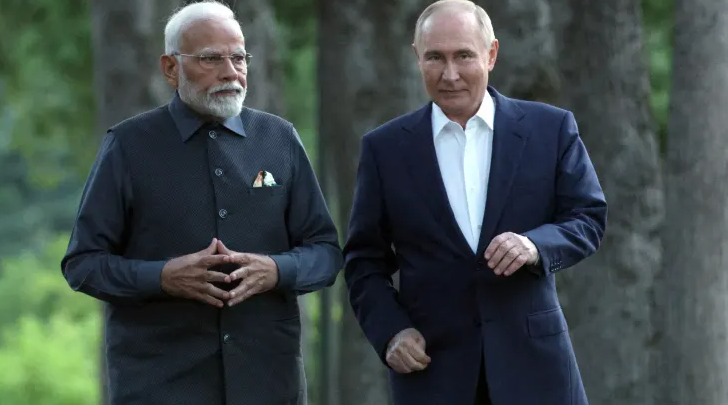
Earlier, Indian Prime Minister Narendra Modi and Russian President Vladimir Putin had tea at a country house outside Moscow.
The meeting was likely to bring the temperature in Washington, D.C. to a boiling point as the NATO military alliance was meeting there at the time.
While the 32-nation NATO leader’s displeasure with the Moscow meeting has been largely kept private, the U.S. says it has expressed its concerns about India’s relationship with Russia directly to India. More broadly, the U.S. has threatened to impose sanctions on entities perceived to be doing business with Russia in an effort to deter Putin’s assault on Kiev.
While India has resisted any pressure, its relationship with Russia is not new.
Moscow has been India’s largest arms supplier for historical reasons. Russia has also supplied India with nuclear fuel since the 1990s and more recently helped it build nuclear reactors.
However, India has increased its oil imports from Russia since the start of the war in Ukraine. This week, trade data released by the Russian government showed that India’s food imports rose 22-fold last season. Modi also thanked Putin for providing a steady, cheap supply of fertilizer to Indian farmers.
The underlying theme behind the deal reveals the motivations behind India’s trading relationship with Russia.
India’s high and volatile consumer prices hurt Modi’s election performance last month, and Prime Minister Modi is doing his best to keep prices down for his citizens. Far from a strategic relationship, India buys goods from the cheapest supplier.
Meanwhile, India’s imports of defense equipment from the West have increased significantly, and the share of Russian weapons in the Indian armed forces has been gradually declining since reaching a high in 2013.